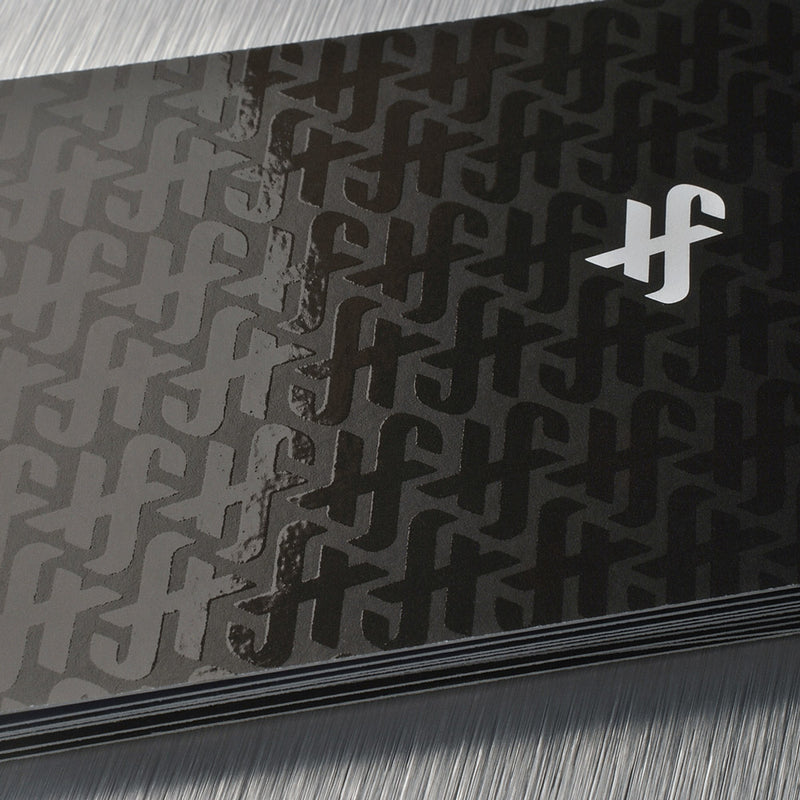
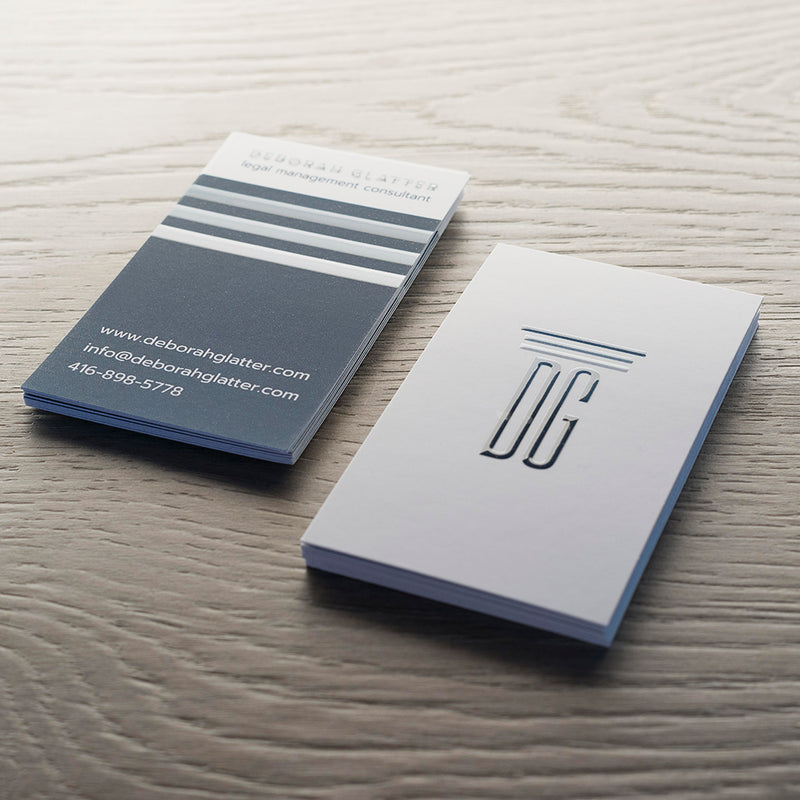
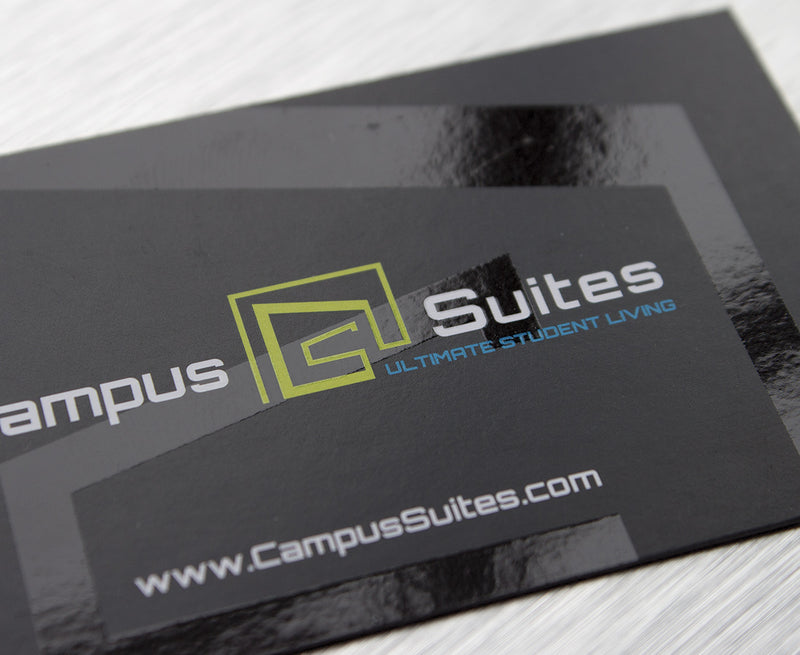
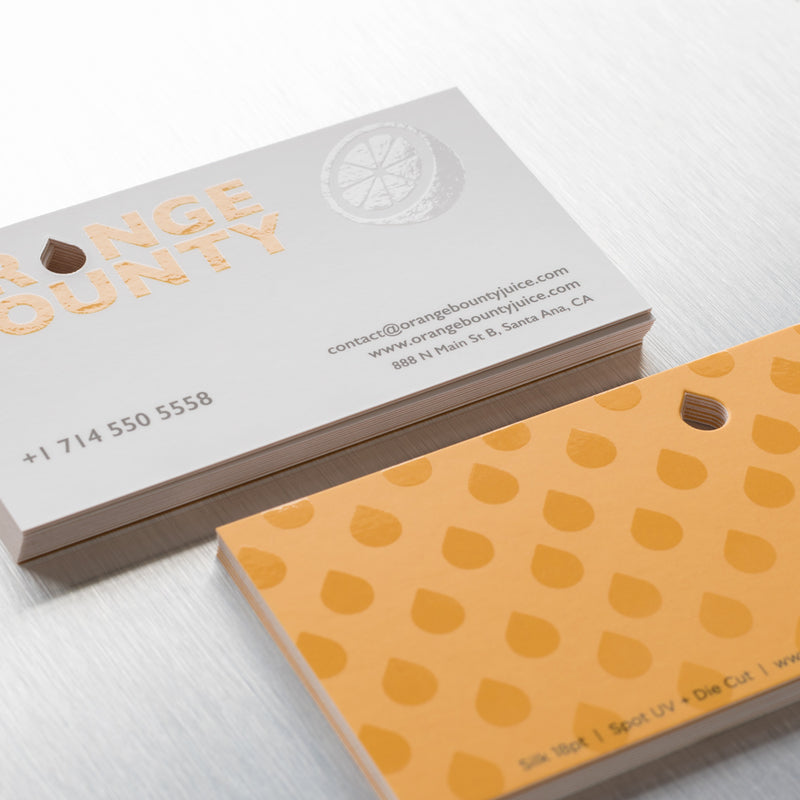
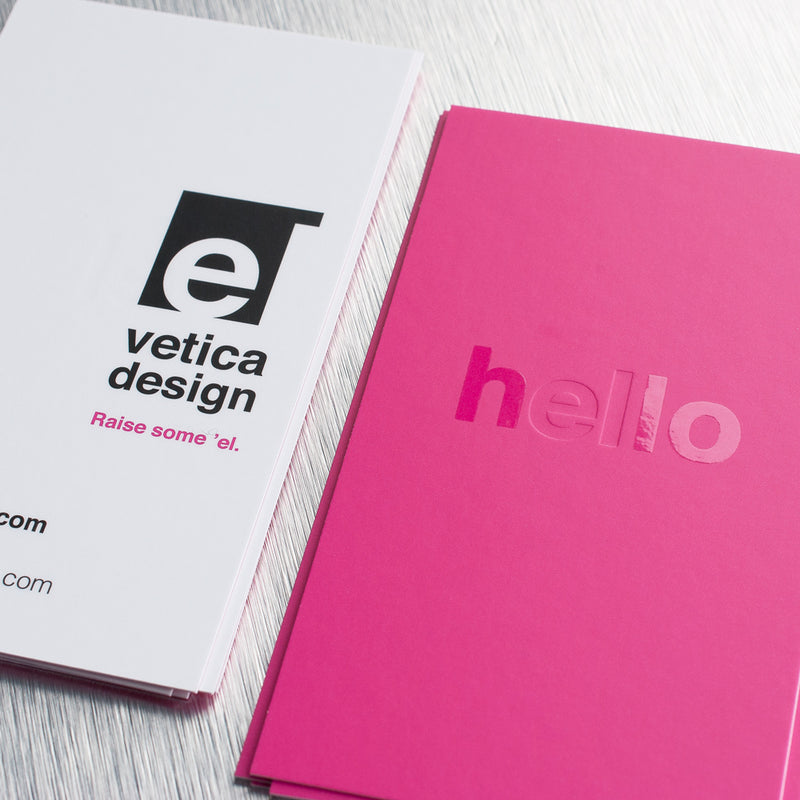
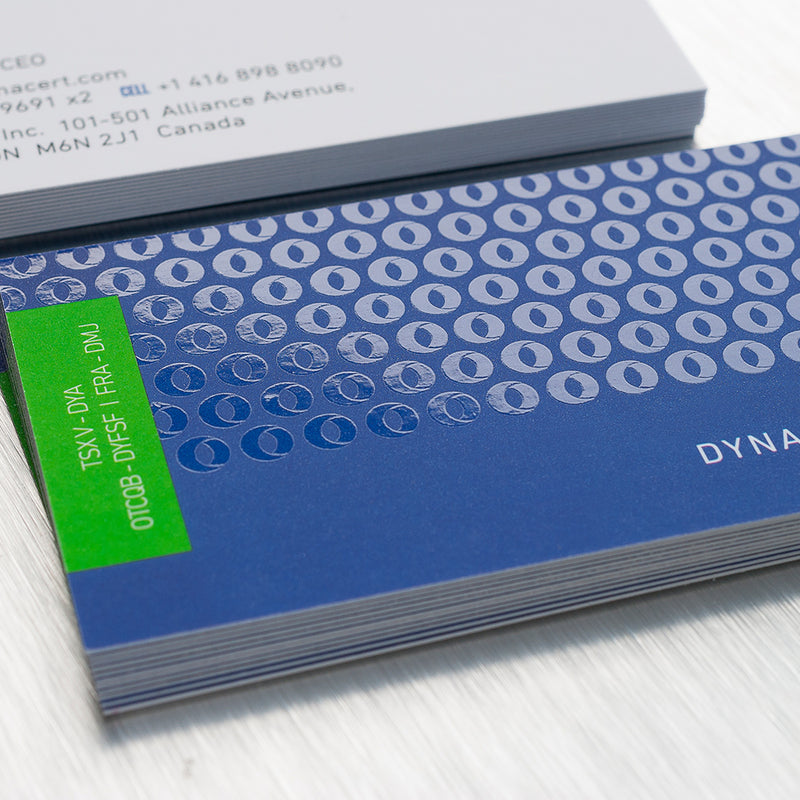
Business cards with raised clear gloss over selected artwork, adding a tactile highlight and contrast to the printed design.
Printing: CMYK offset printingFinish: Digital raised spot UV on selected artwork areas.
Production: Additional finishing time follows artwork and UV-file approval.
Files: PDF only, set up in CMYK, with 1/8-inch bleed on all sides and crop marks. Supply a separate vector PDF for the UV mask.
Previous specifications
Use these specifications as a reference. Current prices apply; confirm your file and all options before adding to cart. If the previous order had multiple sets, review the cart quantity too.
About this product
Raised Spot UV Business Cards combine full-colour printing with a high-build clear gloss applied selectively over designated areas of the artwork. The raised UV layer creates tactile relief and strong visual contrast against the underlying laminated surface without introducing an additional printed colour.
The finish works particularly well on logos, typography, patterns and selected graphic elements where gloss and dimensional detail are intended to become part of the design. Because the coating is transparent, printed artwork remains visible beneath the raised surface while gaining additional depth and reflectance.
Raised Spot UV is applied as a separate finishing operation after printing and lamination. Accurate production requires dedicated UV artwork and registration to the printed image, so the UV layer should be supplied as an independent production separation.
Selective gloss: the reflected band shows where clear UV coating catches the light against the lower-reflectance card surface.
Raised Spot UV Finish Specifications
Finish: High-build clear UV polymer selectively applied over designated areas of the printed and laminated card surface.
Surface Contrast: The cured UV layer produces a high-gloss finish over a lower-reflectance silk-laminated base, creating both visual and tactile differentiation between treated and untreated areas.
Relief: Raised Spot UV forms a physical layer above the card surface. Final relief is influenced by artwork geometry, coating area, production settings and curing characteristics.
Transparency: The coating is clear and allows the underlying printed colour or graphic element to remain visible. Perceived colour beneath the coating may appear deeper or more saturated because of the increased gloss and reflectance.
Artwork Suitability: Logos, typography, patterns, line work and selected graphic elements are generally well suited to Raised Spot UV. Extremely fine details, small reverses and narrow gaps between coated elements should be reviewed before production.
Large Coated Areas: Broad UV areas can produce strong gloss and tactile contrast, but may display more visible surface variation than smaller isolated elements. Coating geometry should be considered as part of the design.
Registration: The Raised Spot UV layer is registered to the underlying printed artwork as a separate finishing operation. Minor positional variation is inherent to normal commercial production and should be considered when designing very tightly aligned elements.
Artwork & Prepress Standards
Print Artwork: Supply a press-ready PDF in CMYK at final trim size, with 1/8-inch bleed on all sides and crop marks. Keep important text inside safe margins, embed or outline fonts, and use production-quality image resolution.
Spot UV Artwork: Supply the Raised Spot UV artwork as a separate PDF containing solid vector elements for the coating.
UV Separation: Elements intended to receive Raised Spot UV should be clearly identified using a dedicated spot colour or equivalent production separation. The UV artwork should contain only the elements intended for coating.
Colour Values: The Spot UV separation is a production mask rather than printed colour information. UV elements should therefore be prepared as solid coverage rather than photographic tonal information unless specifically reviewed for production.
Fine Detail: Very fine rules, small type, narrow gaps and intricate patterns may require adjustment to ensure reliable coating and separation between adjacent UV areas.
Bleed: Raised Spot UV should generally be kept away from trim edges unless the production method has been specifically reviewed for edge-to-edge application. Critical UV elements should remain within appropriate finishing safety margins.
Logo detail: directional light reveals the raised clear coating around the printed letterforms. Blue edges shown are a separate finish.
Proofing & Production Standards
Printing: Full-colour printing is completed first, followed by lamination, Raised Spot UV application and final converting.
Proofing: Digital PDF proofing is available for checking printed artwork, UV separation, positioning and general production setup. A digital proof cannot reproduce the physical height, gloss, reflectance or tactile character of the finished UV layer.
Colour Behaviour: The clear gloss coating can alter the perceived density and contrast of the printed colour beneath it. This optical effect varies according to ink colour, coating area and viewing angle.
Finishing Tolerance: Raised Spot UV is a registered secondary finishing process. Small variations in coating position, edge definition and relief are normal within commercial production tolerances.
Trim & Registration: Narrow borders, UV elements positioned very close to trim, and artwork requiring exact edge-to-edge alignment should allow adequate tolerance for both printing and finishing registration.
Surface Handling: Raised UV provides a durable cured surface, but highly raised or finely detailed elements may show wear through repeated abrasion or handling over time.
Production Time: Raised Spot UV requires additional finishing beyond standard printed business cards. Turnaround is therefore generally longer than conventional laminated card production and begins after final artwork and UV separation approval.
Use left/right arrows to navigate the slideshow or swipe left/right if using a mobile device
Choosing a selection results in a full page refresh.
Press the space key then arrow keys to make a selection.